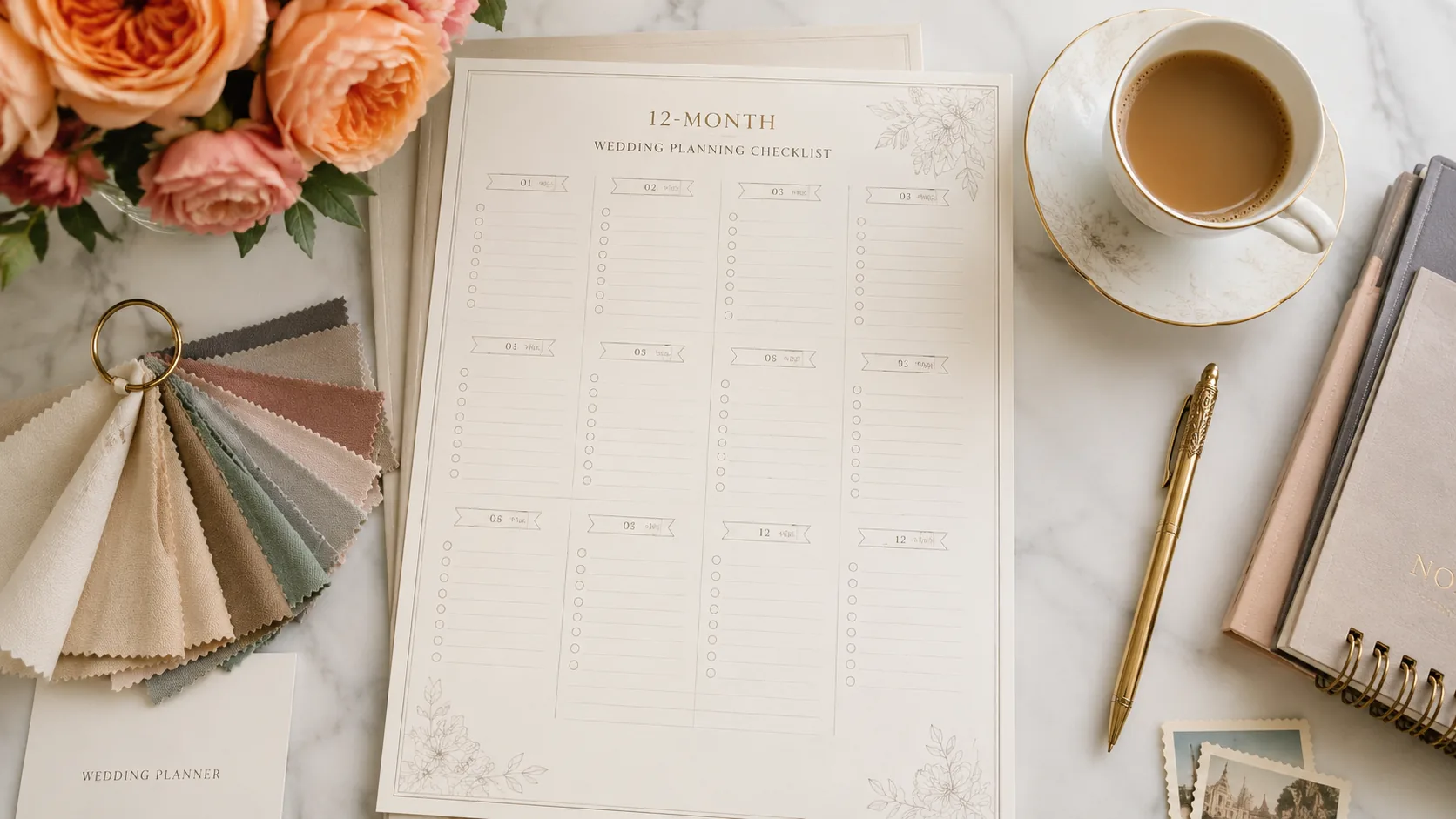

Planning a wedding without a professional planner is completely doable. Thousands of couples do it every year, and most of them will tell you the same thing: the secret is not talent or connections, it is timing. Knowing what to do when is what separates a smooth wedding from a stressful one.
12 months out: lock in the big three
Your venue, your date, and your rough guest count drive almost every other decision. Book these first, in that order. Popular venues in most cities book out 12 to 18 months ahead, so if you have a specific place in mind, do not wait. Once you have a venue and a date, set a total budget before you do anything else. A realistic starting point for a 100-person wedding in a mid-size US city is $30,000 to $45,000, though that number shifts significantly by region.
10 to 11 months out: build your vendor team
Photographers and videographers book out fast, often faster than venues. Prioritize these alongside your caterer if your venue does not provide one. This is also the window to hire a day-of coordinator if you want one. A coordinator is not the same as a full-service planner. They step in 4 to 6 weeks before the wedding to manage logistics, confirm vendors, and run the day itself. For self-planners, a day-of coordinator is one of the highest-value hires you can make.
8 to 9 months out: send save the dates and finalize your look
Save the dates should go out 8 to 12 months before the wedding for destination events and 6 to 8 months for local ones. This is also when to start shopping for attire. Wedding dresses typically require 4 to 6 months for ordering and alterations, so shopping at the 8-month mark gives you a comfortable buffer. Do not leave this until 3 months out unless you are open to sample gowns or off-the-rack options.
6 to 7 months out: finalize catering, florals, and music
If your venue uses preferred vendors, now is the time to meet with them. If you have open sourcing, start comparing quotes. Get at least three quotes per vendor category before signing anything. When you receive vendor contracts, read them carefully before signing. Pay attention to cancellation clauses, overtime fees, and what happens if a vendor has to pull out. A tool like BudgetIQ can flag unusual contract terms and help you understand what you are agreeing to before money changes hands.
4 to 5 months out: invitations and the guest list
Formal invitations should arrive in guests' hands 6 to 8 weeks before the wedding. That means you need to have them designed, printed, and addressed by the 4-month mark. Build your seating chart in draft form now even if you do not have RSVPs yet. It is much easier to move people around a draft chart than to build one from scratch two weeks before the wedding.
2 to 3 months out: details and final payments
Most vendors require a final headcount 2 to 4 weeks before the event, so confirm your RSVP deadline at the 3-month mark and follow up with non-responders personally. This window is also when final payments come due for most contracts. Keep a running payment schedule so nothing catches you off guard. Unexpected charges are common in catering contracts, especially around service fees and gratuity, so review your invoices line by line before paying.
The final two weeks
Confirm every vendor in writing. Send each one a timeline, their arrival window, a contact number for the day, and parking or load-in instructions. Print two physical copies of your full vendor list and timeline: one for you and one for your day-of coordinator or a trusted person in your wedding party. Do not rely entirely on your phone on the day of the wedding.
A note on staying organized
A checklist tells you what to do. A system keeps track of whether you actually did it. Whether you use a spreadsheet, a notes app, or a dedicated planning tool, the important thing is having one place where your vendor contacts, contracts, payments, and tasks all live. Jumping between email threads and Google Docs works until it does not, usually at the worst possible moment.
The couples who feel calm on their wedding day are almost never the ones who had everything go perfectly. They are the ones who planned far enough ahead that small surprises did not spiral. Start early, stay systematic, and give yourself more buffer than you think you need.