Every industry is being told that AI will change everything, and event planning is no exception. Some of what is being said is real. Some of it is not. After managing client experiences, fashion shows, and retail activations at Louis Vuitton -- and then building Eventio specifically to solve the operational gaps my own team kept running into -- I want to give you a grounded account of where things stand.
Where AI is genuinely useful right now
The most meaningful applications of AI in event planning today fall into three categories. The first is document analysis: reading vendor contracts and flagging clauses that are unusual, risky, or missing. This used to require either legal expertise or the kind of pattern recognition that comes from reviewing hundreds of contracts. AI handles it in seconds and explains its findings in plain language. The second is vendor matching: taking a set of event parameters (type, size, budget, location, style) and surfacing vendors who are a strong fit based on more variables than any manual search would reasonably cover. The third is timeline and task generation: turning a set of event inputs into a working planning framework that a planner can refine rather than build from scratch.
What AI cannot replace
Relationships and judgment are still entirely human. A planner's ability to negotiate with a vendor they have worked with for years, to read the room when a client's expectations are shifting, or to make the call in a high-pressure moment when the timeline has gone sideways is not something AI replicates. It also cannot replace the creative direction that makes an event feel distinctive rather than competent. AI is good at processing information and surfacing patterns. It is not good at knowing what matters to a specific person on a specific day.
The shift from search to conversation
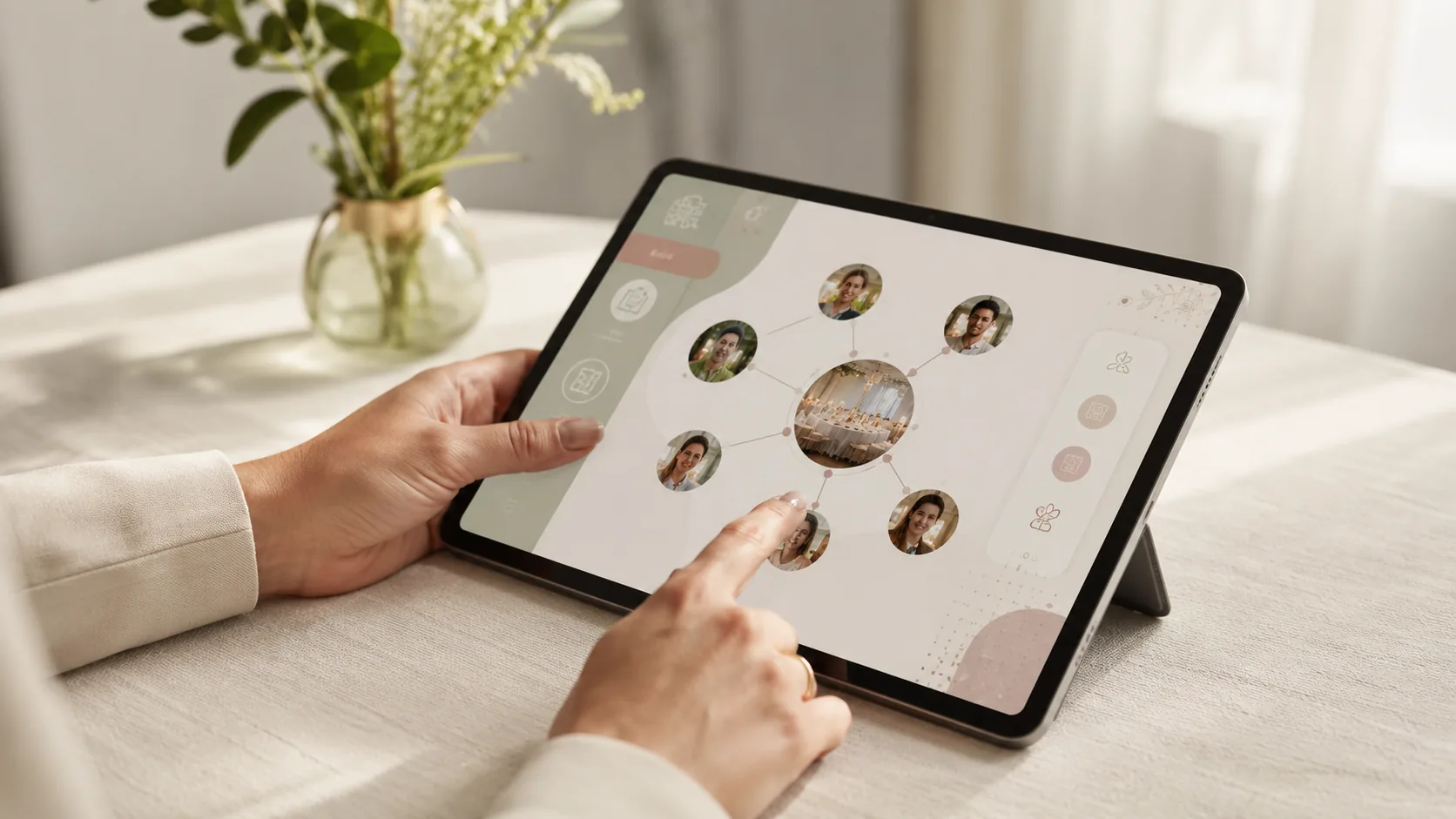
One of the more interesting changes is in how planners are discovering and evaluating vendors. The traditional model is search-based: browse a directory, read reviews, reach out to a handful of options, and compare quotes. AI-assisted platforms are replacing parts of that workflow with a conversational model. Instead of searching for 'photographers in Nashville under $4,000,' a planner or couple describes what they are looking for in context and the platform surfaces a curated shortlist with an explanation of why each option fits. That is a meaningfully different experience, and it tends to produce better matches with less back-and-forth.
AI as a leveler for self-planners
For DIY planners, AI tools represent a shift in what is realistically manageable without professional help. The knowledge gap between a first-time couple planning their own wedding and a professional planner with 15 years of experience has always been significant. AI-assisted platforms narrow that gap by giving self-planners access to the kind of guidance, alerts, and pattern recognition that used to live only in a professional's head. That does not eliminate the value of professional planners. It raises the floor for what someone without professional experience can confidently do on their own.
What planners should actually pay attention to
If you are a professional planner evaluating AI tools, the questions worth asking are specific: Can this tool analyze a contract and tell me if there is a payment clause I have not seen before? Can it surface vendors I have not worked with that fit a tight brief? Can it help me move faster on the parts of my work that are repetitive without compromising the parts that require my judgment? If the answer to those questions is yes, and you can verify it with a real example, the tool is worth investigating. If the pitch is mostly about automation and efficiency without specifics, be skeptical.
The event planning industry is not going to be replaced by AI. But it is going to be reorganized around it. The planners and organizers who understand what the tools do well, and more importantly what they do not, will be the ones who use them most effectively.